BEST Funeral Directors – KNOW YOU’RE IN GREAT CARE
Types of Funeral
When arranging a funeral, one of the biggest decisions is choosing the type of funeral that feels right for your loved one. For many families, this can feel unfamiliar, emotional and overwhelming.
This guide explains the main types of funerals in the UK, including cremation, burial, direct cremation, natural burial, religious funerals, non-religious funerals, humanist funerals, celebration of life funerals and family-led funerals. It also covers less common options such as water cremation, which is now legal in Scotland.
At Best Funerals, we help families understand their options clearly, so they can make a decision that feels respectful, practical and right for the person who has died.
Enter your postcode to see the Best Funeral Director we have carefully selected in your area. Or call us on 0333 242 2368.
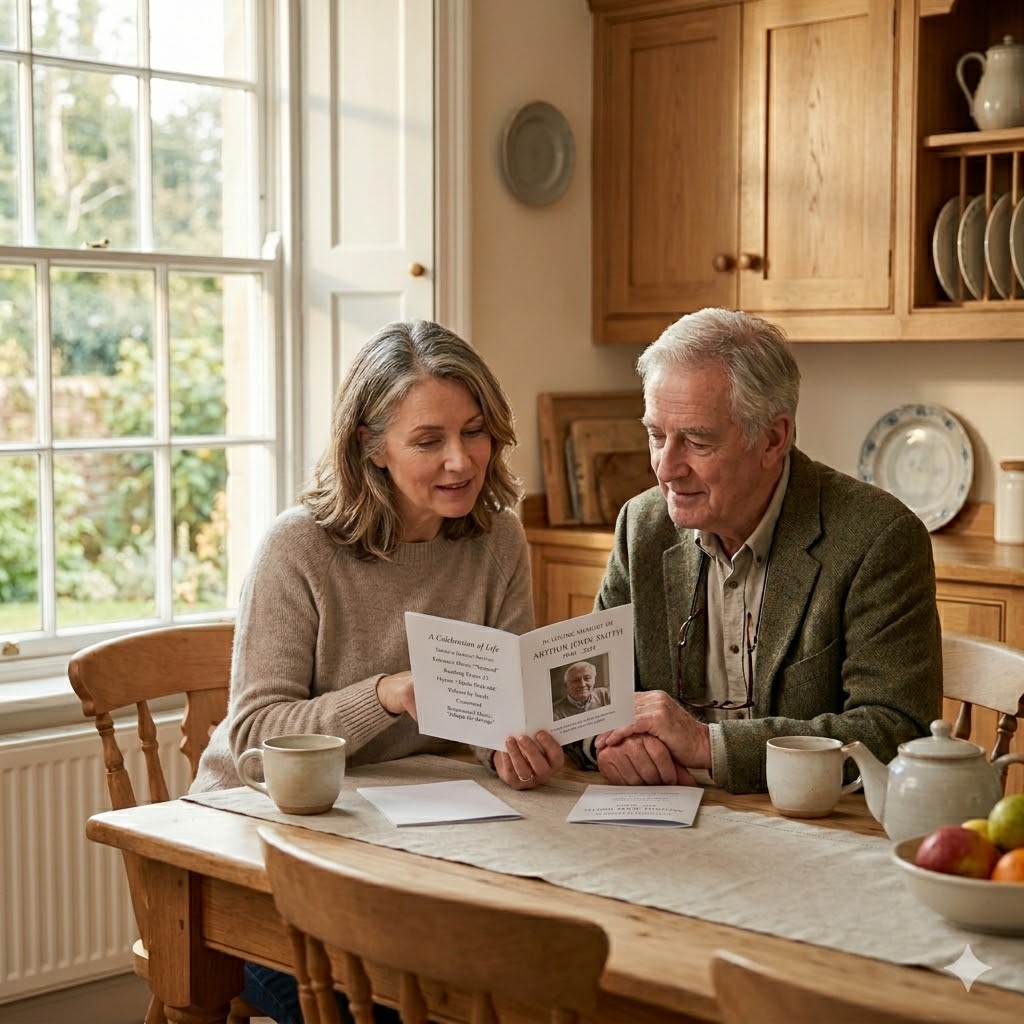
What are the main types of funeral in the UK?
The main funeral types in the UK include:
- Cremation
- Burial
- Direct cremation
- Natural or woodland burial
- Religious funerals
- Non-religious funerals
- Humanist funerals
- Celebration of life funerals
- DIY or family-led funerals
Some families may also wish to explore less common options, including water cremation, although availability remains limited.
Funeral types comparison table
|
Funeral type |
Typical cost |
Best suited to |
Key points |
|---|---|---|---|
|
Cremation |
£3,500 to £5,500 |
Families wanting flexibility and choice |
Common in the UK, can be traditional or personalised |
|
Burial |
£4,500 to £8,000+ |
Families wanting a permanent resting place |
Often higher cost due to plot and cemetery fees |
|
Direct cremation |
£1,200 to £2,000 |
Families wanting the lowest cost, simplest option |
No attended service at the crematorium |
|
Natural or woodland burial |
£3,500 to £6,500 |
Families wanting an environmentally conscious option |
Usually uses biodegradable materials |
|
Religious funeral |
£3,000 to £8,000+ |
Families guided by faith and tradition |
Requirements vary by religion |
|
Non-religious funeral |
£3,000 to £5,500 |
Families wanting a personal service without faith content |
Flexible in tone and format |
|
Humanist funeral |
£3,200 to £5,500 |
Families wanting a non-religious funeral led by a celebrant |
Focuses on the person’s life and values |
|
Celebration of life |
£2,000 to £6,000+ |
Families wanting a more uplifting and personal farewell |
Can sit alongside burial, cremation or direct cremation |
|
DIY or family-led funeral |
Varies |
Families wanting a hands-on role |
Can be very personal, but requires confidence and planning |
|
Water cremation |
Limited UK pricing |
Families exploring newer lower-emission options |
Legal in Scotland, not yet widely available |

Choose Best Funerals for trusted local care.
Share your postcode and we’ll match you with your local Best Funeral Director – carefully vetted for compassion, professionalism, and quality, so you can move forward with confidence.
Cremation Funerals
Cremation is one of the most common funeral types in the UK. It usually involves a service at a crematorium, chapel or other chosen venue, followed by the cremation itself.
Families can choose a traditional cremation with mourners present, a private committal, or a more personalised ceremony that reflects the life, beliefs and wishes of the person who has died.
Typical cost: Often around £3,500 to £5,500, depending on location, funeral director fees, venue choices and the style of service.
Best suited to: Families who want a flexible option that can be traditional, simple or highly personalised, and those who would like choices about what happens to the ashes afterwards.
Burial Funerals
Burial involves laying the person to rest in a grave, usually in a cemetery, churchyard or burial ground. Some families choose burial for personal, cultural or religious reasons, while others value having a dedicated place to visit and remember their loved one.
Burial may involve a service in a church, chapel or other venue, a graveside committal, and the purchase of a new grave or use of an existing family grave, where permitted.
Typical cost: Often around £4,500 to £8,000 or more, as burial costs can rise significantly depending on grave purchase fees, location and cemetery charges.
Best suited to: Families who want a traditional funeral, a permanent resting place to visit, or who are following personal, cultural or religious preferences that favour burial.
Direct cremation
Direct cremation is a cremation without a funeral service at the crematorium and usually without mourners attending. The cremation takes place first and the ashes returned. The family can then choose whether to hold a separate memorial or celebration of life afterwards.
Direct cremation is generally the lowest cost funeral option available in the UK.
Typical cost: Often around £1,200 to £2,000, although prices vary by provider and location.
Best suited to: Families who prefer simplicity, need a lower cost option, do not want a formal funeral service, or would rather hold a personal memorial at a later date.
Natural and woodland burial
Natural burial and woodland burial focus on environmental considerations and a more natural return to the earth. These funerals usually take place in dedicated natural burial grounds or woodland sites.
They often involve biodegradable coffins or shrouds, a lower environmental impact and a peaceful natural setting.
Typical cost: Often around £3,500 to £6,500, depending on the burial ground, plot fees and the type of arrangements chosen.
Best suited to: Families who want an environmentally conscious funeral, a simpler return to nature, or a setting that feels peaceful, informal and connected to the natural world.
Religious funerals
A religious funeral follows the beliefs, traditions and customs of a particular faith. This may shape the service itself, the timing, whether burial or cremation is appropriate, and the rituals that should be observed.
Religious funerals in the UK may include Christian, Catholic, Muslim, Jewish, Hindu, Sikh and other faith traditions.
Typical cost: Costs vary widely depending on whether the funeral is a burial or cremation, the faith requirements, venue, officiant and local charges. In many cases, families may spend anywhere from around £3,000 to £8,000 or more.
Best suited to: Families for whom faith is central, where religious customs need to be observed carefully, or where spiritual beliefs are an important part of saying goodbye.
Non-religious funerals
A non-religious funeral does not follow a faith-based format. Instead, it focuses on the person’s life, character, values and relationships.
A non-religious service may include music, readings, personal tributes and moments of reflection. This type of funeral can be held at a crematorium, cemetery chapel, funeral home, outdoor venue or another meaningful location, depending on what is possible locally.
Typical cost: Often around £3,000 to £5,500, depending on whether it is linked to cremation or burial and how simple or personalised the arrangements are.
Best suited to: Families who want a personal farewell without religious content, and who would like flexibility over the tone, location and structure of the ceremony.
Humanist funerals
A humanist funeral is a specific type of non-religious funeral. It is usually led by a trained humanist celebrant and centres on the life, values and individuality of the person who has died, without religious content.
Humanist funerals are often warm, personal and thoughtful. They can provide structure and meaning for families who want a sincere ceremony that reflects the person’s life and relationships in a non-religious way.
Typical cost: Often around £3,200 to £5,500, depending on whether the funeral is a burial or cremation and the fees for the celebrant, venue and other arrangements.
Best suited to: Families who want a non-religious funeral with a clear structure, a strong focus on the person’s life, and a ceremony led by a trained celebrant.
Celebration of life funeral
A celebration of life funeral places particular emphasis on remembering and honouring the person’s life, personality, relationships and achievements. It may be held instead of a more traditional service, or alongside a cremation, burial or direct cremation.
These funerals are often more informal in tone and may include storytelling, favourite music, photographs, videos and contributions from family and friends.
Typical cost: Costs vary widely depending on whether this is combined with cremation or burial, and on the venue and style chosen. Families may spend anything from around £2,000 for a simple memorial after direct cremation to £6,000 or more for a larger event.
Best suited to: Families who want the farewell to feel uplifting, personal and centred on the life that was lived, rather than following a more traditional funeral format.
DIY or family-led funeral
A DIY funeral or family-led funeral involves the family taking a more active role in arranging and delivering some or all parts of the funeral. This can range from leading the ceremony themselves to managing practical elements with limited support from a funeral director.
For some families, this creates a deeply personal and meaningful farewell. For others, it may feel like too much to manage during a time of grief.
Typical cost: Costs can vary greatly depending on how much professional support is used, but a family-led funeral may reduce some expenses while still involving essential third-party costs such as cremation, burial, transport or paperwork.
Best suited to: Families who want a very personal hands-on approach, feel confident managing arrangements, or want greater involvement in shaping every part of the farewell.
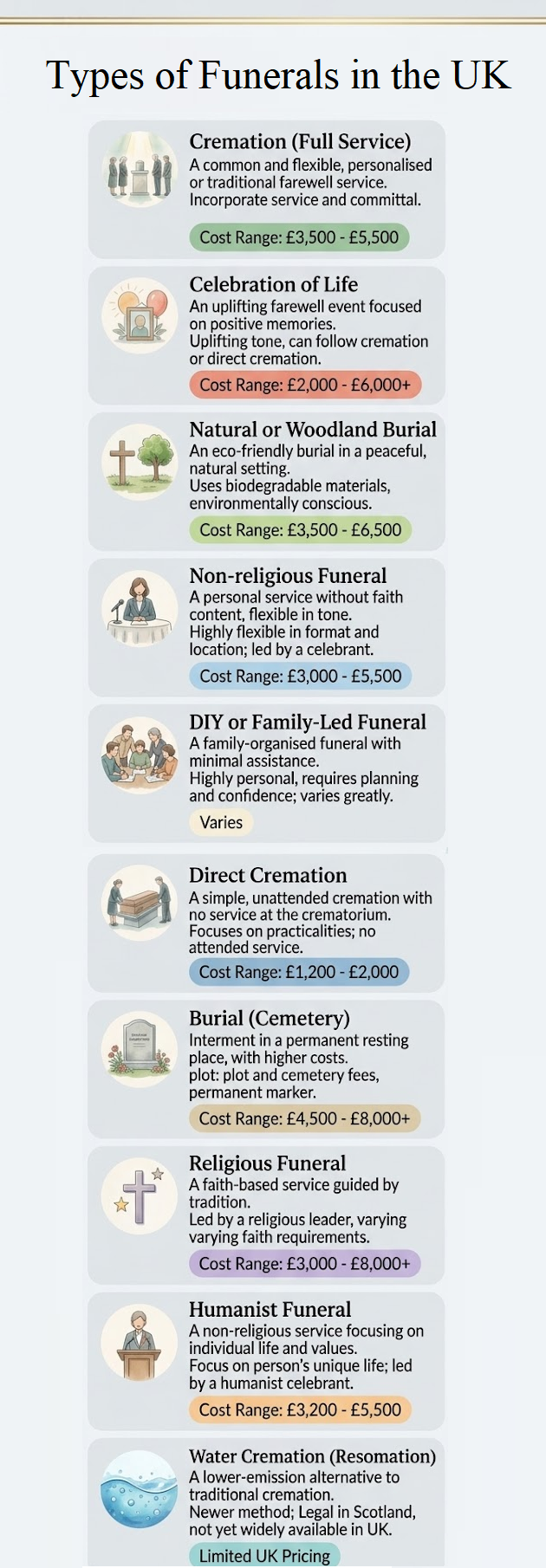
Funeral options at a glance
Alongside the more familiar funeral options, some families may hear about newer or less common alternatives.
Water cremation
Water cremation, sometimes called alkaline hydrolysis or resomation, is an alternative process that uses water and alkali rather than flame. It is sometimes discussed as a lower-emission option. Water cremation is now legal in Scotland, although it is not yet widely available across the UK.
Typical cost: Costs are still difficult to estimate in the UK because availability is limited and the process is not yet widely offered.
Best suited to: Families who are specifically interested in newer lower-emission alternatives and are willing to explore limited availability and developing regulations.
Can all funeral types be personalised?
Yes. Whatever type of funeral you choose, there is usually scope to personalise the service so it reflects and honours the person who has died.
A funeral can be personalised through music choices, readings or poems, flowers and colours, personal tributes, the location or style of the ceremony, and symbolic touches that reflect beliefs, values or personality.
Whether you choose cremation, burial, direct cremation, a woodland burial, a religious funeral or a non-religious service, personal touches can help create a meaningful farewell. We covering this in more detail in our dedicated page on personalising a funeral.
How to choose the right type of funeral
Choosing the right type of funeral can feel difficult when emotions are high and there are so many decisions to make. It can help to slow things down and focus on a few key questions.
What did the person want?
If your loved one expressed clear wishes, these should usually be the starting point. They may have talked about burial or cremation, wanted a religious or non-religious service, or simply shared what would have felt right to them.
What does the family want?
A funeral is also for the people left behind. Some families want a formal ceremony, while others want something simpler, quieter or more personal. It is worth thinking about what will bring the most comfort and meaning.
What are the practical constraints, including cost?
Budget, location, timing, local availability and the type of venues or burial plots available can all shape what is realistic. Being honest about practical limits can help narrow the options without losing sight of what matters most.
What are the religious or cultural considerations?
For some families, faith and tradition will guide many of the decisions. Certain beliefs may influence the timing of the funeral, the type of service, and whether burial or cremation is appropriate.
What style of ceremony feels right?
Some people would have wanted a traditional funeral, while others may have preferred something informal, modern or celebratory. Thinking about the tone of the farewell can help you decide which type of funeral is the best fit.
What would feel right in 10 years’ time?
In the middle of immediate grief, it can be hard to think clearly. One helpful question is whether the choice you make now will still feel right, respectful and comforting years from now. This can help cut through pressure, noise and urgency.
There is no single right answer. The best choice is the one that feels most respectful to the person who has died, most supportive for the family, and most manageable in practical terms.
The best funeral director will help guide you through all of these options and support you in deciding what is right for you, your family and your budget.
Read our guide to choosing a funeral director.
About Best Funerals
At Best Funerals, we help remove the uncertainty of finding a trusted funeral director by connecting families with the one carefully selected independent funeral directors we have selected in each area. Chosen for their quality, care and local reputation.
Read more about Best Funerals.
Choose Best Funerals for trusted local care.
At Best Funerals, we carefully select trusted independent funeral directors who have been chosen for their professionalism, compassion and local care. We believe families should not have to face confusing choices or risk impersonal service when arranging a funeral.
Enter your postcode to see the Best Funeral Director we have carefully selected in your area.
Or call us on 0333 242 2368.
Frequently asked questions
If you still have questions, these answers cover some of the most common concerns families have when comparing funeral options, costs and practical choices. They are designed to help you understand the differences clearly and feel more confident about the next steps.
Q: What is the most common type of funeral in the UK?
A: Whilst cremation is the most popular type of funeral in the UK, this does vary regionally and is often influenced by the availability of burial plots and the relative costs involved.