
BEST Funeral Directors – KNOW YOU’RE IN GREAT CARE
What happens on the day of a funeral
The day of a funeral can feel daunting especially if you have never arranged one before. If you’re wondering what happens on the day of a funeral, this guide explains the typical order of events, who does what, and what you may want to prepare in advance.
If you’d like calm, local support, Best Funerals can help you find your local Best Funeral Director.
Enter your postcode to see the Best Funeral Director we have carefully selected in your area. Or call us on 0333 242 2368.
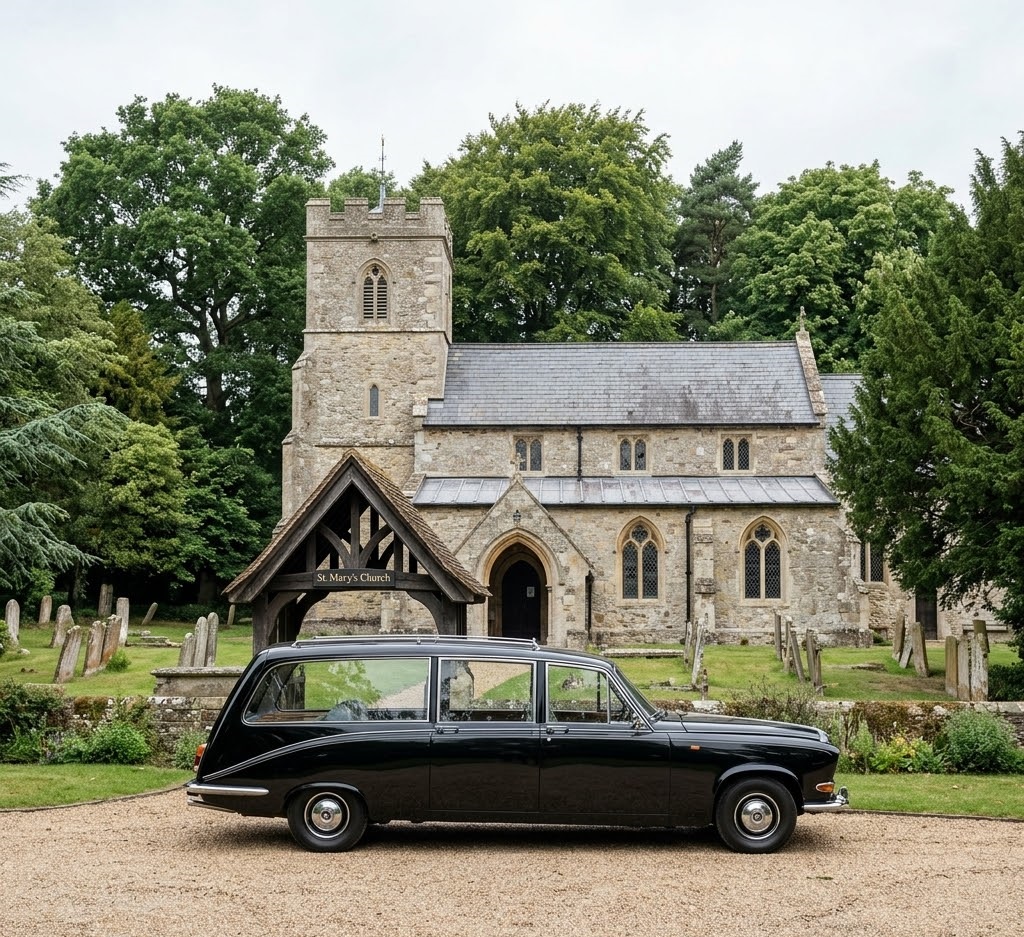
Quick overview of the day of a funeral timeline
While every funeral is different, the day often follows this pattern:
- The funeral director confirms timings and final details (often the day before)
- The hearse and funeral cortege travel to the service location
- The funeral service takes place (religious or non-religious)
- The committal happens (the final moments of burial or cremation when the coffin is removed from sight)
- The family leaves the cemetery or crematorium
- A wake or gathering may follow
Before you leave home
On the day of the funeral, it can help to keep things simple.
- Check the time and location of the service and committal
- Confirm travel plans (who is driving, who needs lifts, and where to park)
- Bring anything needed for the service, such as readings, music choices, photos, or an order of service
- Allow extra time many people arrive 20-30 minutes early
If you are unsure about anything, your funeral director is there to guide you.
They will normally confirm the arrangements in the days before the funeral and be available by phone for any last minute questions.
The funeral directors role on the day
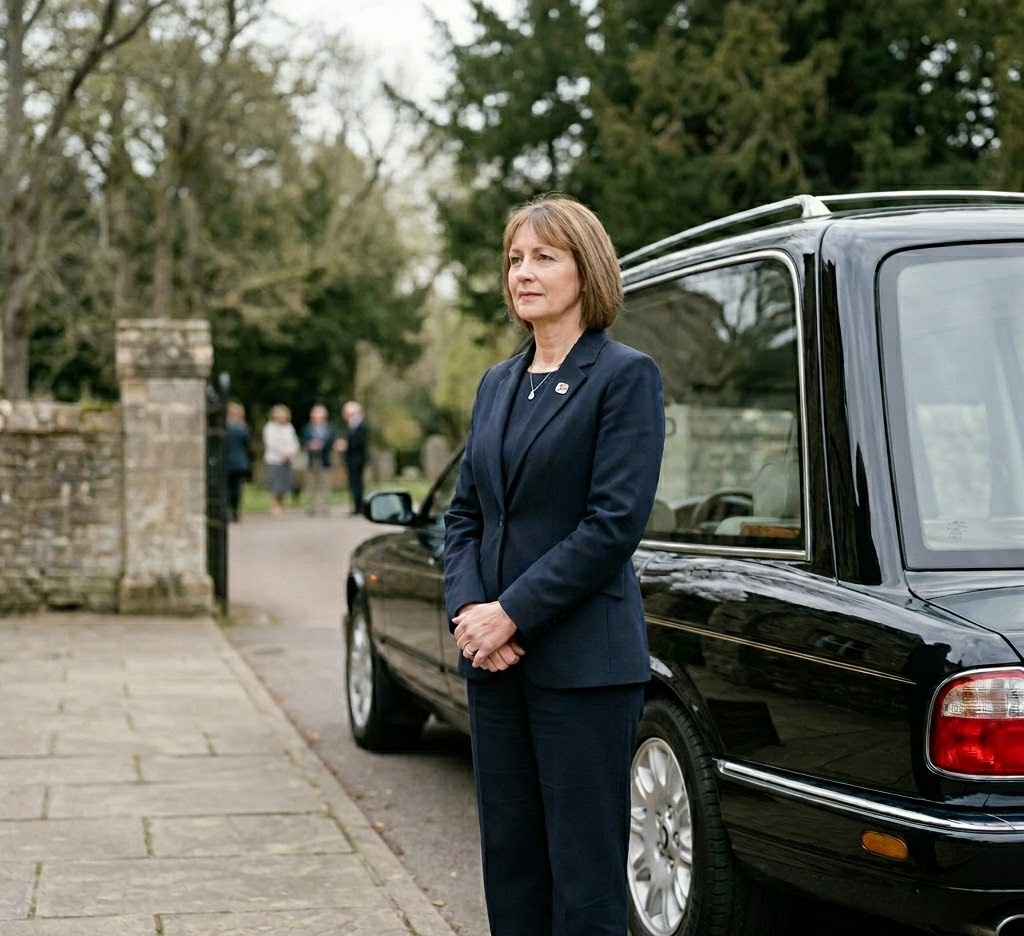
Your funeral director coordinates the practical details so you can focus on saying goodbye.
They typically:
- Bring the hearse and any family cars
- Ensure flowers and tributes are in place
- Liaise with the venue (church, crematorium, cemetery) and the officiant or celebrant
- Help with timing, seating, and any special requests
- Provides a team of pallbearers to carry the coffin, or guides the pallbearers (if you have chosen family or friends to carry the coffin)
Read more about Best Funerals.
Choose Best Funerals for trusted local care.
Share your postcode and we’ll match you with your local Best Funeral Director – carefully vetted for compassion, professionalism, and quality, so you can move forward with confidence.
Paging – what is it and why is it done?
You may notice the funeral director pages the hearse at key moments on the day of the funeral. Paging is a traditional gesture of respect, a quiet, formal way of marking the start and end of the final journey.
Historically, funeral customs in the UK have often included small acts of ceremony to show dignity and care, especially at moments of transition (leaving home, arriving at the place of service, and the committal).
Paging is part of that tradition: it’s not about rushing on or being dramatic; it’s a professional sign that the funeral director is present, attentive, and treating the person who has died with respect.
Typically, the funeral director will page the hearse:
- At the start of the final journey, as the hearse leaves the funeral home or the home of the person who has died
- On arrival at the service venue, before the coffin is brought inside
If you’re unsure what will happen, your funeral director can explain the exact steps for your venue and your family’s wishes.
The hearse and processional cortege
A hearse transports the coffin to the service. Some families choose to follow behind in funeral cars, while others travel separately.
You may also choose:
- The starting point of the procession (for example the family home, or the funeral home)
- A particular route through the local area
- A short pause outside a meaningful place (for example, the person’s home, workplace or a place with special meaning)
- A walking procession for part of the journey (where appropriate)
Your funeral director can advise what is possible and what permissions may be needed.
Arriving at the venue
How arrival works can vary depending on whether the service is at a crematorium, a church, or another venue.
Arriving at a crematorium
At many crematoriums, mourners typically wait outside for the hearse to arrive. This helps the family enter together and keeps the arrival calm and organised.
- When the hearse arrives, the coffin is removed by the pallbearers
- The family connects with the officiant or celebrant as well as the chapel attendant at the crematorium, and checks all is ready
- The funeral director checks with the family that all mourners are present and if they are happy for the service to begin
- The funeral director will then lead the family into the chapel (service room), family members take their seats at the front of the service room, mourners follow behind and take their seats
- The pallbearers carefully place the coffin on the catafalque, which is a raised platform at the front of the service room.
Arriving for a church service
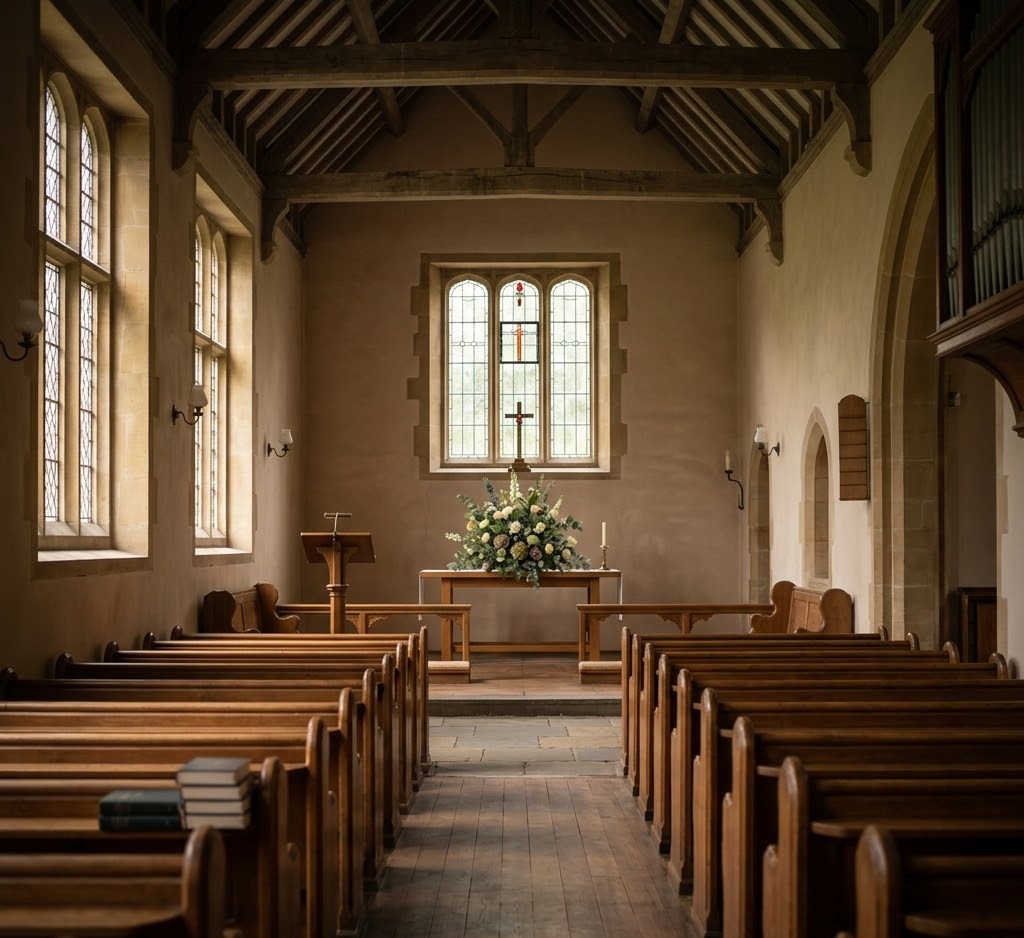
For many church funerals, mourners typically go into the church first and are seated, awaiting the arrival of the hearse.
- When the hearse arrives, the minister may greet the family outside
- The minister then leads the procession into the church, followed by the family and then other mourners
- Family members take the seats at the front of the chapel with other mourners sitting behind
- The pallbearers carefully place the coffin on the catafalque, which is a raised platform at the front of the church.
Your funeral director will coordinate closely with the minister and the church to make sure everything runs smoothly.
The funeral service
The funeral service is the part where family and friends gather to remember the person who has died.
A funeral service may include:
- Music on arrival
- A welcome and opening words
- Readings (religious or non-religious)
- A eulogy or tribute
- Prayers, reflection, or moments of silence
- Closing words and music
How long does a funeral service last?
Many services last 20-45 minutes, depending on the venue and what is included.
Some church services may be longer, especially if there are hymns, prayers, or Holy Communion.
Your funeral director will confirm the timing and help you plan readings and music to fit.
Religious and non-religious funerals
- A religious funeral may be led by a Minister, Priest, Imam, Rabbi, or another faith leader.
- A non-religious funeral is often led by a celebrant and can be shaped around the person’s life, values, and wishes.
There is no right format. What matters is that it feels respectful and true to the person.
The committal
The committal is the moment of final farewell.
If it is a cremation
At a crematorium, the committal happens in the chapel. The coffin may be:
- Removed from sight, either lowered, taken through a door or curtains close around the catafalque, or
- Left in place on the catafalque while the family exits.
This can be an emotional moment. Your officiant or celebrant will guide everyone through it gently.
If it is a burial
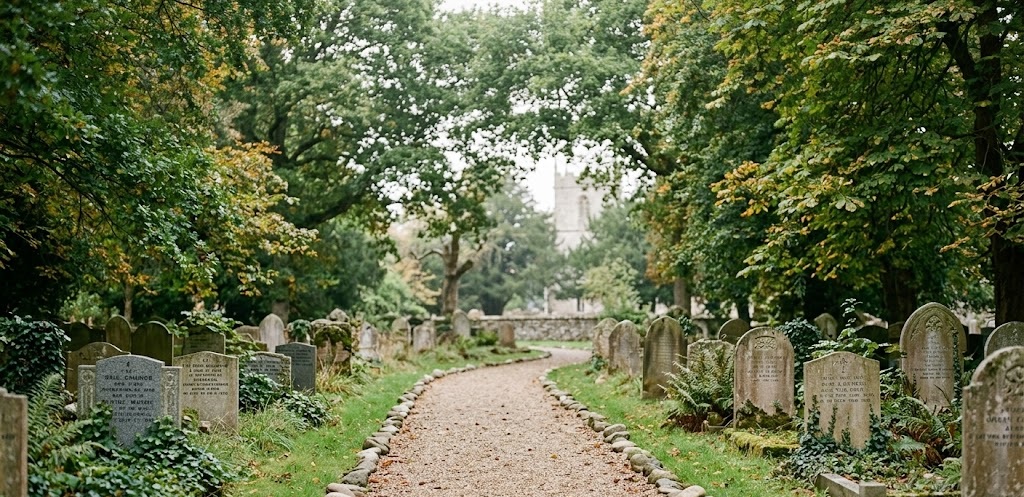
At a cemetery or churchyard, the committal happens at the graveside.
- The coffin is carried or moved to the graveside
- Words are said by the officiant or celebrant
- Some families choose to scatter soil or place flowers on the coffin or into the grave
- The coffin may be lowered into the ground during the committal, or afterwards (this varies)
Your funeral director will explain what will happen and ensure the family is supported throughout.
A final word from the funeral director
At the very end of the service, the funeral director will usually speak to the client (the person who arranged the funeral) and lead family members, to offer condolences and to check everything has gone as the family wished.
A Best Funeral Director will also typically contact you the next day, or within a few days, and remain available if you need continued support.
Read our guide to how a funeral director can support you after the funeral.
After the service
After the committal, people usually leave the venue gradually.
Some families choose to:
- Meet guests outside to accept condolences
- Travel to a wake or gathering
- Return home for quiet time
If there is a wake, it can be as formal or informal as you wish from a small family meal to a larger gathering.
What happens to the ashes after a cremation?
If the funeral is a cremation, the ashes are not usually available immediately.
In most cases:
- The crematorium prepares the ashes over the following days
- The funeral director can collect them, or you may collect them directly (depending on arrangements)
- You can then decide whether to keep, scatter, bury, or place the ashes in a memorial
If you are unsure what to do, your funeral director can talk through the options.
What happens after a burial?
After family and friends have left the graveside, the cemetery or churchyard team will fill in the grave.
In many cases:
- A temporary marker may be put in place
- The ground then needs time to settle before a permanent memorial can be installed
How long this takes varies by cemetery, soil conditions, and weather, but it is often several months. Your funeral director or memorial mason can advise on the usual timeframe locally and when a permanent headstone can be safely put in place.
What happens on the day of a direct cremation?
A direct cremation is a cremation without mourners attending a service at the crematorium. It is usually a simple, unattended committal.
On the day, it typically works like this:
- The funeral director brings the person who has died to the crematorium
- The coffin is placed onto the catafalque and the funeral director and pallbearers nod their heads as a mark of respect before taking their leave
- The cremation takes place at a time arranged with the crematorium
- There is no service with family and friends present
- The ashes are then prepared and returned in the usual way (often within a few days)
Many families choose a direct cremation and then hold a separate memorial later, at home or at a venue, or somewhere meaningful, when they feel ready.
Frequently asked questions
It’s completely normal to have practical questions about the day of the funeral, especially if you’ve never been to a funeral before, or you’re supporting someone close to you. Below are answers to some of the most common questions families and mourners ask about what to expect.
Q: Do I have to speak at the funeral?
A:No. Some people find it meaningful to speak, but it is never required. You can ask the officiant, celebrant, or another family member to read a tribute.
Q: What should people wear?
A: Many people wear dark, formal clothing, but this is not a rule. Some families request a particular colour or a more relaxed dress code. The right choice is whatever feels respectful and appropriate.
Q: What time should I arrive for a funeral?
As a guide, many people arrive 20-30 minutes early. This gives you time to park, find your seat, and settle before the family arrives.
Q: Where do I sit at a funeral?
A: Close family usually sit at the front. If you’re unsure, follow the funeral director’s guidance or ask venue staff. Friends and colleagues typically sit behind the family.
Q: Can I bring children to a funeral?
A: Yes, many families do. It can help to:
- Explain in simple terms what will happen
- Bring something quiet to hold (a small toy or book)
- Sit near an exit in case they need a break
Q: What happens if someone is late?
A: Venues work to a schedule, so it’s best to arrive early. If someone arrives after the service has started, staff may ask them to wait and enter quietly at an appropriate moment.
Q: Do I need to bring flowers?
A: No. Some families ask for family flowers only, or request donations to a charity instead. If you’re unsure, check the funeral notice or ask the funeral director or family.
Q: Can I take photos or record the service?
A: Often this is possible, but it should be agreed in advance with the family and the officiant/celebrant, and it may depend on the venue’s rules.
Q: What happens to the flowers after the funeral?
A: Families may choose to:
- Take flowers home
- Leave them at the grave (for a burial)
- Arrange for them to be donated (for example, to a care home)
Your funeral director can advise what is possible locally.
Q: What happens if I become overwhelmed during the service?
A: It’s completely normal. You can step outside for a moment, venue staff and the funeral director are used to supporting people quietly and respectfully.
Q: What happens if the weather is bad at a graveside burial?
A: The funeral will usually still go ahead. Your funeral director will help keep things as safe and comfortable as possible, and the officiant may keep the graveside committal brief if conditions are difficult.
The Best Funeral Directors are usually prepared for all weather, with umbrellas on hand for rainy days.
Choose Best Funerals for trusted local care.
Share your postcode and we’ll match you with your local Best Funeral Director – carefully vetted for compassion, professionalism, and quality, so you can move forward with confidence.