BEST Funeral Directors – KNOW YOU’RE IN GREAT CARE
Cremation funerals: how they work, what to expect and how to arrange one
A cremation funeral is one of the most common ways to say goodbye in the UK.
For some families, that means a traditional service with music, readings, flowers and a full gathering of family and friends. For others, it means something simpler – a shorter ceremony, fewer formalities and a more understated farewell.
If you are arranging a cremation funeral, Best gives you a clear place to begin. We will explain the next steps and instruct the carefully selected local Best Funeral Director for your area, who will guide the arrangements and care for your loved one through their own established local business.
Enter your postcode to see the Best Funeral Director we have carefully selected in your area. Or call us on 0333 242 2368.

What is a cremation funeral?
A cremation funeral is a funeral in which the person who has died is cremated rather than buried.
Usually, it includes an attended service before the cremation, although the structure can vary. The ceremony may take place:
- at a crematorium chapel;
- in a church or place of worship before the cremation;
- at another suitable venue;
- or, in some cases, in a simpler and more private format.
A cremation funeral often includes:
- professional care of the person who has died;
- a coffin;
- transport to the crematorium;
- an attended service or ceremony;
- music, readings, prayers or tributes;
- the committal;
- and decisions about what should happen to the ashes afterwards.
For many families, cremation offers flexibility. It allows for a formal service if that is what feels right, but it can also work well for a more personal or simple approach.
Is a cremation funeral the same as direct cremation?
No – and this is one of the most important distinctions to understand.
A cremation funeral usually means there is a service that family and friends can attend.
A direct cremation is different. It is an unattended cremation, with no funeral service at the crematorium. Families often hold a memorial or gathering separately, before or after the cremation.
At a glance
| Cremation funeral | Direct cremation | |
|---|---|---|
| Can family and friends attend? | Yes | No |
| Is there a service? | Usually, yes | No service at the crematorium |
| Can it be religious or non-religious? | Yes | The memorial afterwards can be whatever the family chooses |
| Personal touches during the funeral | Yes – music, readings, flowers, tributes and more | Usually held separately from the cremation itself |
| Often chosen by | Families wanting a shared farewell | Families wanting a simpler, unattended arrangement |
Best Funerals mainly helps families arrange attended funerals, including cremation funerals. If you are considering an unattended option, you can also explore Best Direct Cremation.
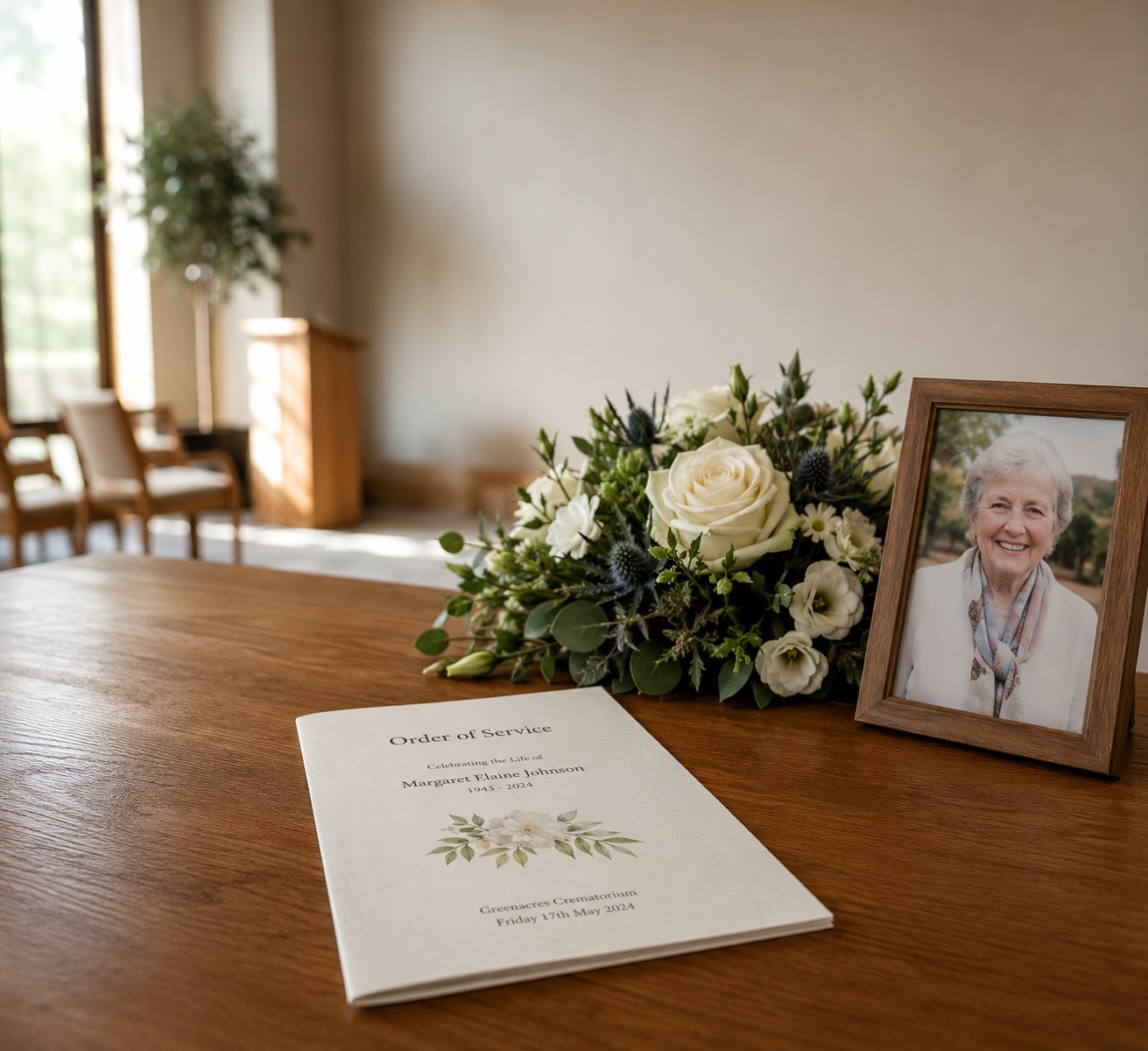
Start making funeral arrangements
One call to Best gives you clear guidance and trusted local care.
Call 0333 242 2368 to arrange a Best Funeral. We will explain the next step and instruct the Best Funeral Director selected for your area.
What happens at a cremation funeral?
Although every funeral is different, most cremation funerals follow a familiar structure.
1. The family and guests arrive
People may arrive directly at the crematorium, meet at a church first or follow behind the hearse.
2. The coffin enters the chapel or service space
This may be carried in by pallbearers or brought in using a funeral trolley or bier. Family members usually take their seats as music is played.
3. The funeral service takes place
This can include:
- a welcome;
- prayers or reflective words;
- hymns or other music;
- readings;
- a eulogy;
- personal tributes;
- quiet reflection;
- final words of farewell.
The service may be led by a minister, celebrant, humanist officiant or another appropriate person.
4. The committal takes place
At the crematorium, the committal usually happens near the end of the service. This is the formal moment of goodbye.
5. Family and friends gather afterwards
Some families hold a wake or reception afterwards at home, in a pub, hotel, community venue or another familiar place.
Your local funeral director coordinates the practical details so the day runs as smoothly and gently as possible.
Where can a cremation funeral service take place?
Many people think a cremation funeral must take place entirely at the crematorium, but there are a few different options.
At the crematorium chapel
This is the most common arrangement. The full service takes place at the crematorium before the cremation.
At a church or place of worship first
Some families hold the main service in church, with the cremation taking place afterwards.
At another venue
Sometimes a family chooses another suitable location for the ceremony, followed by cremation later.
The right choice depends on the person’s beliefs, the tone of the funeral, the number of guests and the kind of farewell the family wants to create.
A local funeral director can explain what is possible at nearby crematoria and venues, including timings, capacity and service options.
What can be included in a cremation funeral?
A cremation funeral can be as simple or as detailed as you want it to be.
It may include:
- bringing the person who has died into care;
- professional mortuary care;
- funeral arrangements and paperwork;
- a coffin;
- a hearse;
- family transport;
- use of the crematorium chapel;
- a minister or celebrant;
- music;
- readings and eulogies;
- flowers;
- an order of service;
- visual tributes;
- charitable donations in memory;
- a reception or gathering afterwards.
Not every family wants every element.
Some want a full, formal service. Others want something quieter and more pared back. A cremation funeral can still feel thoughtful and meaningful without including every possible extra.
That is one reason many families prefer working with a local independent funeral director: the arrangements can be shaped around the person, rather than squeezed into a rigid template.
What happens to the ashes?
This is often one of the questions families think about later – but it can help to know the options early.
After the cremation, the ashes can usually be:
- collected by the family;
- returned through the funeral director;
- buried;
- scattered in a meaningful placewhere permitted;
- placed in a grave or memorial plot;
- kept in an urn at home.
Some crematoria have gardens of remembrance or dedicated areas for scattering ashes. Others may allow families to arrange collection and decide privately what feels right.
There is no need to rush the decision unless a specific deadline applies locally. Your funeral director will explain the options and the timescales.
For many families, the funeral and the decision about the ashes feel like two different stages. The service is the immediate goodbye; the ashes often become part of a later conversation about remembrance.
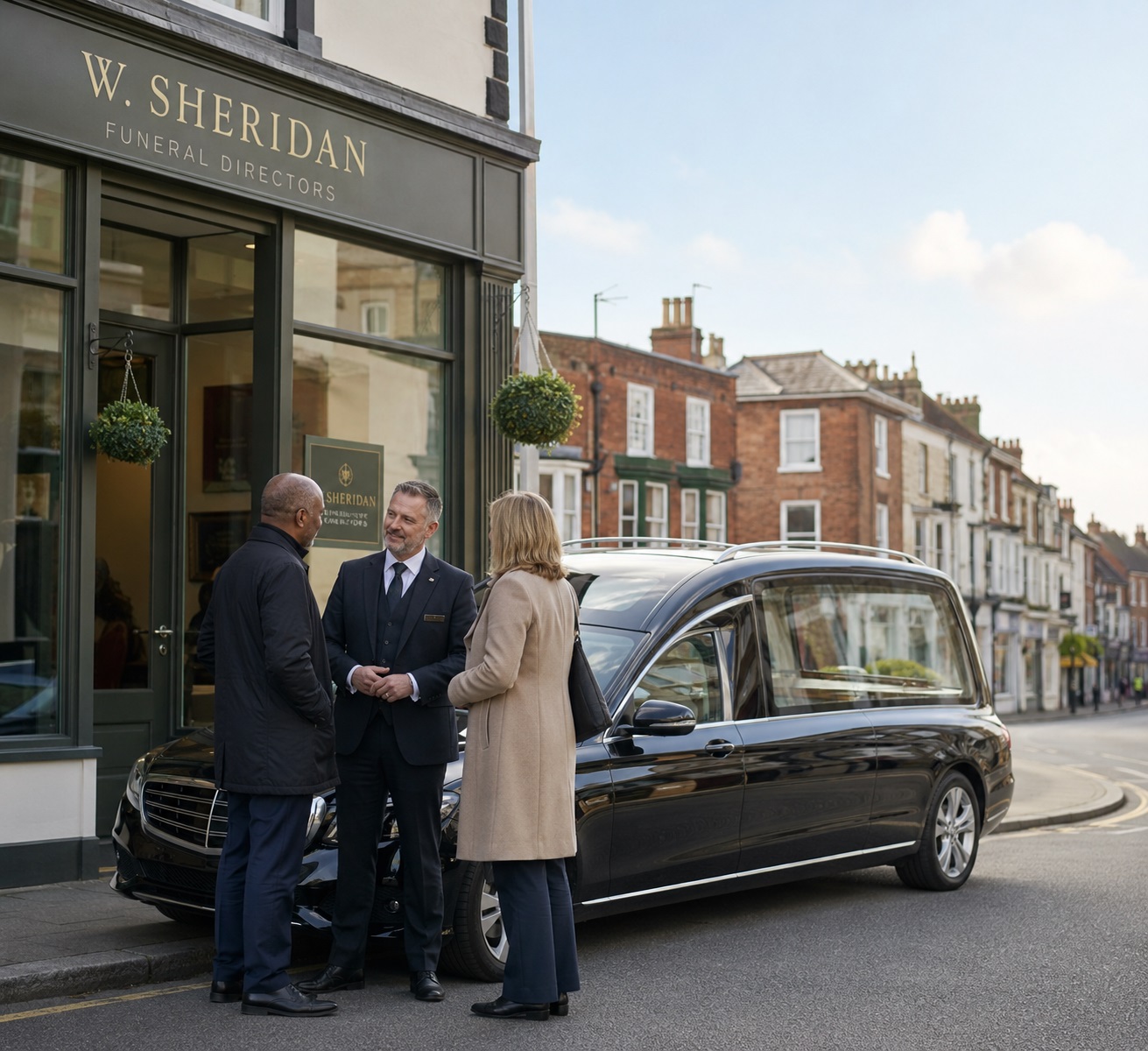

A cremation funeral can still feel very personal
There is sometimes a mistaken idea that cremation funerals are more impersonal than burials.
In reality, some of the most moving and memorable funerals are cremation services.
That may come from:
- a favourite piece of music;
- a heartfelt eulogy;
- a simple chapel full of familiar faces;
- a poem read by a grandchild;
- flowers from the garden;
- a favourite colour in the order of service;
- one very ordinary, very recognisable story about the person’s life.
A good funeral director helps you focus on what fits the person, rather than what seems expected.
You do not need dozens of additions to make the funeral meaningful. Often, one or two well-chosen details carry the most weight.
You can read more in our article on personalising a funeral.
How much does a cremation funeral cost?
The cost of a cremation funeral depends on the type of service, the funeral director’s own charges and the fees set by the crematorium and any other third parties.
As a general guide, recent UK averages have placed:
- a simple attended cremation at around £3,518;
- and a more traditional attended cremation at around £4,200.
These are national averages and local prices may be lower or higher depending on the area and the arrangements chosen.
The final cost can be affected by:
- the crematorium fee;
- the coffin;
- funeral transport;
- minister or celebrant fees;
- flowers;
- printed materials;
- music or visual tribute systems;
- the gathering afterwards;
- and any additional funeral-director services.
A clear written quotation should separate:
Funeral director charges
Such as arrangements, care, staff, the coffin and transport.
Third party costs
Such as crematorium fees, officiant fees and venue-related charges.
Optional additions
Such as limousines, upgraded flowers or printed stationery.
Best is not about pushing a one-size-fits-all national package. The aim is to help families arrange the funeral that feels right, with clear local care and fair, transparent pricing.
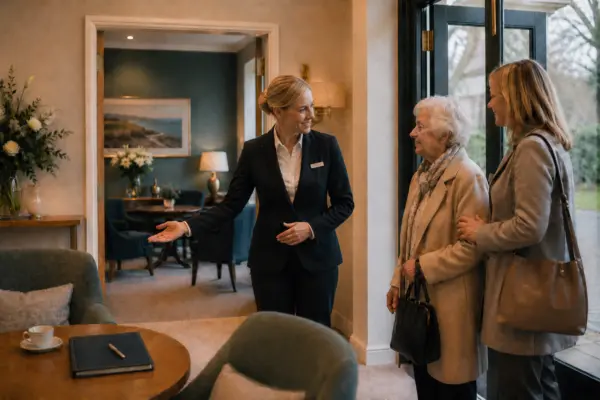
Want to understand cremation funeral costs in your area?
Call Best on 0333 242 2368 and we will explain the next steps and instruct the local Best Funeral Director selected for your area.
Why choose a local independent funeral director for a cremation funeral?
A cremation funeral may look simple on the day, but a great deal sits behind it.
There are timings to coordinate, crematorium procedures to follow, service details to confirm and practical decisions to guide the family through.
A local independent funeral director can help with all of that while also offering something harder to measure but just as important: familiarity, flexibility and personal care.
They know the local crematoria.
They know how the service slots work.
They know what is possible, what tends to work well and where families may need a little more support.
Best makes that choice easier by carefully selecting one local independent Best Funeral Director for each area.
So instead of spending hours comparing providers, you can start with confidence – knowing a trusted local team is already in place.
Why arrange a cremation funeral through Best?
Best does not leave families to work through a long list of unfamiliar providers.
We carefully select one local independent funeral director for each area based on their care, standards, people, facilities and local reputation.
When you call Best:
- we explain the next step;
- we confirm the local Best Funeral Director for your area;
- the local team provides the care and arrangements through their own established business;
- and Best remains available and accountable for the standards promised.
That means the family gets the reassurance of Best and the care of a real local funeral director who knows the area and can guide the arrangements properly.

A cremation funeral should feel clear, dignified and well cared for
Call Best now on 0333 242 2368 and know you’re in great care.
Frequently asked questions about cremation funerals
Cremation funerals can bring up plenty of practical questions, from how long the service lasts to what happens to the ashes afterwards. Below, we answer some of the things families most often want to know, helping you understand what to expect and how the funeral can be shaped around your wishes.
Q: What is a cremation funeral?
A: A cremation funeral is a funeral service followed by cremation instead of burial. It is usually attended by family and friends and can be religious or non-religious.
Q: Is a cremation funeral the same as direct cremation?
A: No. A cremation funeral usually includes a service that people can attend. A direct cremation is unattended and has no funeral service at the crematorium.
Q: How long does a cremation funeral service last?
A: This depends on the crematorium and the booking. Many chapel services last around 20 to 40 minutes, although longer slots may sometimes be available.
Q: Can we have a church service before the cremation?
A: Yes. Some families hold the main service in church or another place of worship before the cremation takes place.
Q: Can a cremation funeral be religious?
A: Yes. It can be religious, non-religious, civil or humanist, depending on the family’s wishes and who is leading the ceremony.
Q: What should we wear to a cremation funeral?
A: There is no fixed rule. Many families choose formal dark clothing, but others may ask guests to wear a particular colour or something that reflects the person who has died.
Q: Can we play our own music at a cremation funeral?
A: Usually, yes. Most crematoria can accommodate chosen music, and some also offer visual tribute options.
Q: What happens to the ashes after a cremation funeral?
A: The ashes can usually be collected, returned through the funeral director, buried, scattered or kept by the family. Your funeral director will explain the options.
Q: Is cremation cheaper than burial?
A: It often is, because burial can involve grave purchase and burial-ground fees in addition to funeral costs. However, the total cost depends on the specific arrangements and local charges.
Q: Can we still have flowers, a hearse and an order of service?
A: Yes. A cremation funeral can include all of those things if you want them to.
Q: Can a cremation funeral be simple?
A: Yes. A cremation funeral can be kept very simple while still being attended, personal and dignified.
Q: Who can help me arrange a cremation funeral?
A: Best can help you get started. We will explain the next step and instruct the carefully selected local Best Funeral Director for your area.
Arrange a cremation funeral with Best
A cremation funeral can be formal or simple, traditional or more personal. What matters is that the arrangements feel right for the person who has died and the people saying goodbye.
Best gives you a clear place to begin, with trusted local care already in place.
Enter your postcode to see the Best Funeral Director carefully selected for your area, or call Best at any time on 0333 242 2368.