BEST Funeral Directors – KNOW YOU’RE IN GREAT CARE
Green funerals and woodland burials: a gentle guide to eco-friendly funerals
For some families, a funeral feels most fitting when it is simple, natural and a little lighter on the environment.
That might mean a woodland burial in a peaceful rural setting. It might mean choosing a biodegradable coffin, avoiding embalming, keeping flowers natural, or simply making thoughtful choices about what is and is not needed. A green funeral does not have to feel unusual or make-do. Done well, it can feel calm, beautiful and deeply personal.
At Best Funerals, we help families understand their options clearly and arrange the funeral that feels right. If you are looking for a green funeral, a woodland burial, or simply a more environmentally conscious way to say goodbye, we can put you in touch with the carefully selected Best Funeral Director for your area.
Enter your postcode to see the Best Funeral Director we have carefully selected in your area. Or call us on 0333 242 2368.
What is a green funeral?
A green funeral is a funeral arranged with environmental impact more firmly in mind.
In practice, that can mean different things. It may involve:
- a natural or woodland burial;
- a biodegradable coffin or shroud;
- avoiding embalming chemicals;
- reducing or avoiding plastics;
- choosing more natural floral tributes;
- simplifying transport or ceremonal extras;
- using a venue or burial ground with a more natural approach.
A green funeral, then, is not one fixed product. It is more a style of funeral and a set of choices.
That is important, because many families assume “green funeral” means only one thing – usually a burial in the woods. In reality, woodland burial is one of the clearest expressions of a greener funeral, but it is not the only route.
A green funeral does not have to mean “starting from scratch”
This is worth saying clearly.
You do not need to organise a DIY funeral in a field to have a greener funeral.
Most families still want good guidance, careful planning and professional support. They simply want that support to help them make more thoughtful choices.
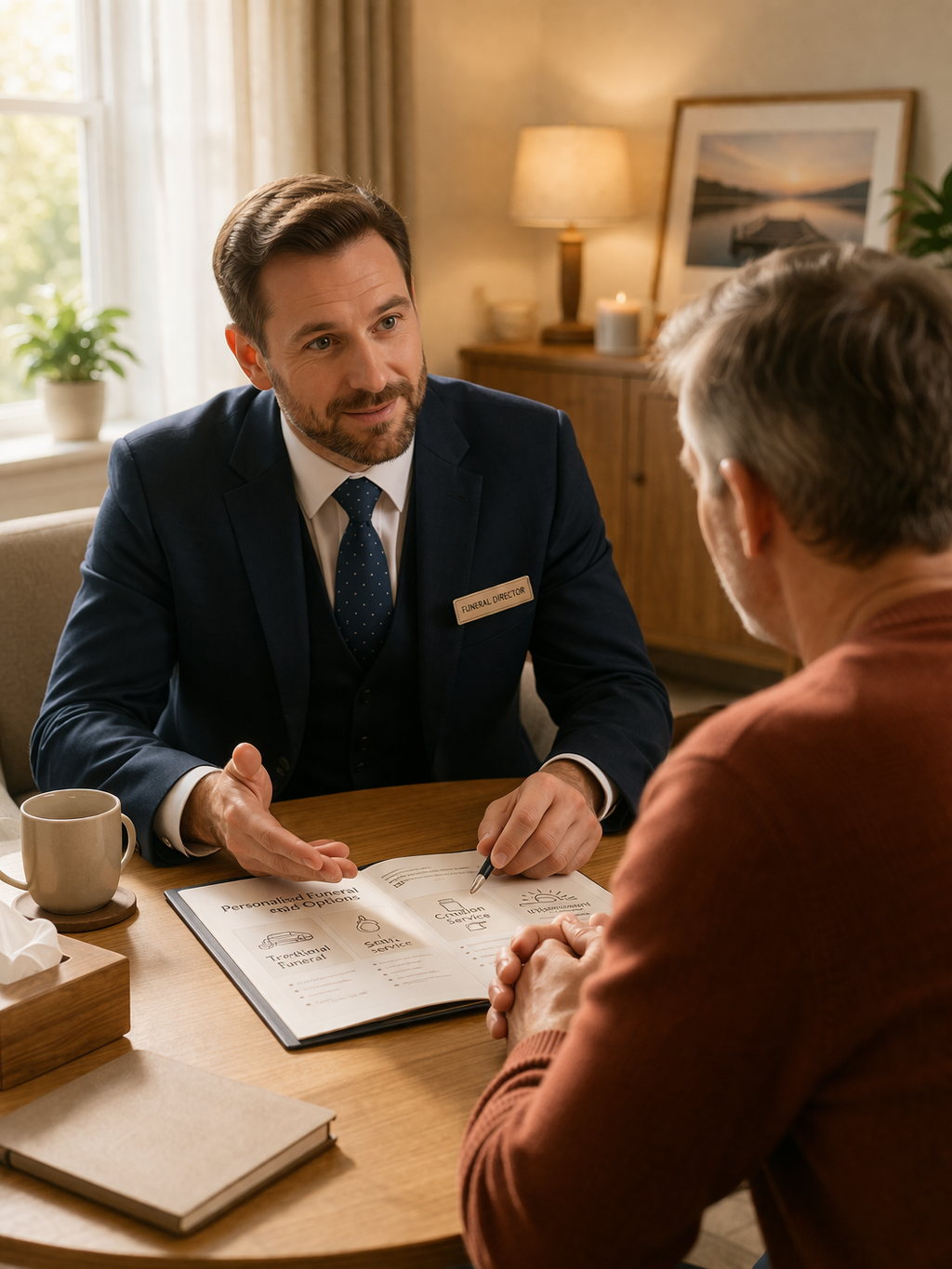
That is exactly where a good local funeral director becomes especially useful. A Best Funeral Director can help you understand what is possible in your area, which natural burial grounds are practical, what kind of coffins or caskets are accepted, and how to keep the funeral both dignified and environmentally conscious.
Looking for a greener kind of funeral?
Best can connect you with a carefully selected independent local funeral director who can guide you through the options and help you arrange a funeral that feels natural, respectful and right.
Call 0333 242 2368 or search by postcode.
What can make a funeral greener?
There are usually several points in the arrangements where families can make meaningful choices.
| Area | Greener choices |
|---|---|
| Care of the person who has died | Avoiding embalming where appropriate |
| Coffin or casket | Cardboard, wicker, woven fibre, natural timber, or a shroud |
| Flowers and tributes | Seasonal flowers, no plastic wrapping, natural tying |
| Service style | Simpler printed materials, fewer disposable items, thoughtful venue choices |
| Transport | Simpler procession arrangements where preferred |
| Burial or cremation | Natural burial, woodland burial, or a cremation with greener supporting choices |
| Memorials | Tree planting, natural markers, simpler memorial items |
Some of these changes are small. Some are more significant. Together, they can alter both the environmental impact and the feel of the funeral.
Often, they also bring a different atmosphere. A green funeral can feel less formal, less ornate and less commercial — not because it is lacking anything, but because it is centred more closely on the essentials.
What is a woodland burial?
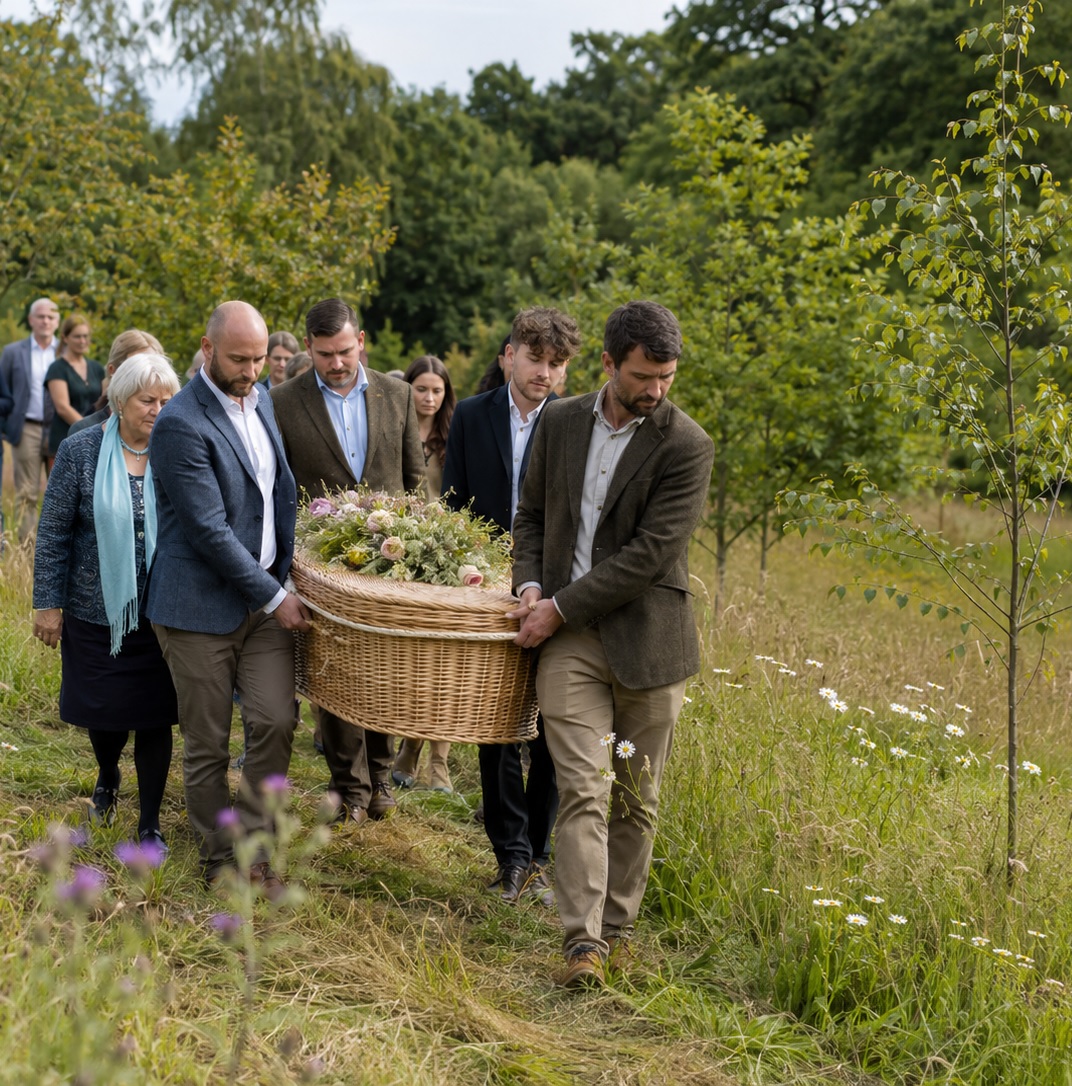
A woodland burial is one of the most recognisable forms of green funeral.
Best’s own funeral-types guide describes natural and woodland burial as funerals that focus on environmental considerations and a more natural return to the earth, often using biodegradable coffins or shrouds and taking place in dedicated natural burial grounds or woodland sites.
In simple terms, a woodland burial usually involves:
- burial in a natural burial ground or dedicated woodland area;
- a biodegradable coffin, casket or shroud;
- few or no traditional headstones;
- more natural surroundings;
- memorial approaches that may be simpler, subtler or living in nature.
For many families, that natural setting is a big part of the appeal. A woodland burial ground can feel softer and quieter than a more formal cemetery. It may feel less like a built environment and more like part of the landscape.
Can you still have a service with a green funeral?
A green funeral is not the same thing as a direct cremation or an unattended funeral. It can still be a fully attended, thoughtful and personal funeral with family and friends present.
You may choose:
- a service at the graveside;
- a service in a chapel or other venue before burial;
- a celebrant-led or family-led ceremony;
- music, readings and tributes;
a simple gathering afterwards.
That is one reason green funerals are often so appealing. They can combine meaning, attendance and personality with a more natural and less wasteful approach.
If a family wants the lowest-cost unattended option, that is usually a different conversation and may point more naturally towards Best Direct Cremation. But if the family wants an attended funeral that feels more natural and environmentally conscious, a green funeral may be a very good fit.


How much does a green funeral cost?
The honest answer is: it varies.
A natural or woodland burial can vary anywhere between £3,500 to £6,500, depending on the burial ground, plot fees and type of arrangements chosen.
That means a green funeral is not automatically the cheapest funeral option. A direct cremation remains much lower-cost on average, with SunLife putting that at £1,628 in 2026. By comparison, the average simple attended funeral is £3,828 and a simple attended burial averages £4,758.
A green funeral can, however, be more affordable than some traditional burials, especially where families make simpler choices around the coffin, flowers, memorialisation and ceremonial extras.
The National Association of Funeral Directors notes that natural or woodland burial can sometimes be more affordable than a traditional churchyard or municipal cemetery, with some natural burial grounds charging as little as £800 to £1,500 for a grave plot, although overall costs still depend on the full arrangements made around the burial.
So the sensible position is this:
- a green funeral is often simpler;
- it is sometimes more affordable than a traditional burial;
- but it is not always a budget funeral;
- and the actual cost depends heavily on the local burial ground and the choices made.
That is why local advice matters so much.
Questions worth asking about a green funeral
If you are comparing options, these are some of the most useful questions to ask.
| Question | Why it matters |
|---|---|
| Is there a natural or woodland burial ground near us? | Availability varies by area |
| What kind of coffin or shroud is accepted? | Each site may have its own rules |
| Are embalming or chemical treatments avoided? | Important for some families |
| Are grave markers or memorials restricted? | Natural burial grounds often have different rules |
| Can we still have a full service? | Most families will want clarity on this |
| What are the plot and interment fees? | Costs vary significantly |
| Can the funeral still reflect faith or personal tradition? | Green funerals can still be highly personal |
| What happens if we want a wake or gathering afterwards? | A greener funeral can still include this |
A good funeral director should be able to answer those questions calmly and clearly. And, importantly, they should be able to adapt the funeral around what matters most to the family.
Why use a local funeral director for a green funeral?
This matters even more with green funerals than it does with many standard arrangements.
A greener funeral usually involves more local detail:
- which natural burial grounds are practical nearby;
- what those grounds allow or require;
- what coffin types are accepted;
- what kind of service can take place there;
- how the burial ground is managed;
- what memorial options are possible.
That is where a local independent funeral director can be so helpful.
At Best, we carefully select one local independent Best Funeral Director in each area. That means you are not simply being passed into a generic national process. You are being connected with a funeral director who knows the local area, the local venues, and the practical details that can make the arrangements smoother and more personal.
And that local knowledge can be particularly valuable if you are searching for a green burial near me or a woodland burial near me. These are not arrangements you want to make blindly.

Arrange a green funeral with local guidance
If you are thinking about a natural burial, woodland burial, or a funeral with greener choices, Best can help you speak to the right local funeral director.
Call 0333 242 2368 or enter your postcode to get started.
Price transparency still matters
Even when a family is choosing a greener funeral for emotional or environmental reasons, the financial side still matters.
The CMA’s legally binding funeral-market rules require funeral directors to display clear pricing information, including a Standardised Price List, an Additional Options Price List, and local crematorium prices, to help customers understand total costs and compare providers properly.
That is useful for green funerals too.
It means families should be able to see more clearly:
- funeral director charges;
- burial or cremation fees;
- additional options;
- what is included;
- what is optional.
So if you are trying to arrange a greener funeral without losing control of the cost, ask for a clear breakdown. That is not being difficult. It is part of making a thoughtful decision.
A green funeral can still feel warm, beautiful and personal – maybe even more so
This is perhaps the most important point on the page.
People sometimes hear “eco-friendly” and imagine something stripped-back, austere or worthy.
In reality, green funerals are often among the most moving and memorable. The natural setting, the simpler materials and the absence of unnecessary fuss can create a very different atmosphere – calmer, gentler and more grounded.
A greener funeral does not have to mean giving less. Often it means choosing more carefully.
A favourite reading still matters. Music still matters. The people who gather still matter. The tone of the service still matters.
The difference is simply that the funeral may tread a little more lightly, and feel a little closer to the values of the person being remembered.
A final resting place deserves careful local attention
Call Best now on 0333 242 2368.
Frequently asked questions about green funerals
Families often come to green funerals with a mixture of interest and uncertainty. These are some of the most common questions people ask when exploring woodland burials and more environmentally conscious funeral options.
Q: What is a green funeral?
A: A green funeral is a funeral arranged with environmental impact more in mind. That may include a natural or woodland burial, a biodegradable coffin or shroud, avoiding embalming, using fewer plastics, and choosing simpler or more natural arrangements.
Q: Is a woodland burial the same as a green funeral?
A: Not exactly. A woodland burial is one type of green funeral. But a funeral can also be greener through choices around the coffin, flowers, embalming, transport and memorialisation, even if it is not a woodland burial.
Q: Can I have an attended service with a green funeral?
A: Yes. A green funeral can still be a fully attended funeral with a ceremony, music, readings, family participation and a gathering afterwards.
Q: Are green funerals cheaper?
A: Sometimes, but not always. Our funeral costs guide places natural or woodland burial at roughly £3,500 to £6,500, depending on the burial ground and the arrangements chosen. Some natural burial grounds may offer more affordable plot fees than traditional cemeteries, but the overall cost depends on the full funeral.
Q: What kind of coffin is used for a green funeral?
A: Often a biodegradable coffin or casket, such as cardboard, natural timber, woven fibre or similar materials. Some sites also allow shrouds, depending on their own rules.
Q: Do green funerals avoid embalming?
A: They often do, where appropriate. Avoiding embalming chemicals is one of the practical eco-friendly measures that funeral directors put in place.
Q: Can I still have flowers at a green funeral?
A: Yes. Many families simply choose more natural arrangements, often with less plastic wrapping and fewer artificial materials.
Q: How do I find a green burial near me?
A: The easiest route is usually to speak to a knowledgeable local funeral director. Best can connect you with the carefully selected Best Funeral Director in your area, who can explain whether there is a natural or woodland burial ground nearby and what options are available locally.
Q: Is a green funeral the same as direct cremation?
A: No. Direct cremation is an unattended cremation without a service at the crematorium. A green funeral is usually an attended funeral with more environmentally conscious choices. If you are specifically considering an unattended option, it may be worth looking at Best Direct Cremation instead.
Arrange a greener funeral with Best
If a green funeral feels like the right fit, you do not need to work it all out alone.
Best can help you speak to a carefully selected independent local funeral director who can explain the options clearly, check what is available nearby, and help you arrange a funeral that feels both natural and personal.
Call Best on 0333 242 2368, or enter your postcode to find the Best Funeral Director for your area.