BEST Funeral Directors – KNOW YOU’RE IN GREAT CARE
Traditional funerals: familiar, personal and cared for locally
A traditional funeral brings people together to acknowledge a death, remember the person who has died and accompany them on their final journey.
It will usually include an attended ceremony, a coffin, a hearse and a formal committal through burial or cremation. There may also be a procession, family cars, flowers, readings, music and a gathering afterwards.
For many families, that familiar structure brings comfort. Every element can still be shaped around the person being remembered, their beliefs and the traditions that matter to those closest to them.
Enter your postcode to see the Best Funeral Director we have carefully selected in your area. Or call us on 0333 242 2368.
What is a traditional funeral?
A traditional funeral is an attended funeral with a ceremony followed by burial or cremation.
The service may take place at:
- a church or another place of worship;
- a crematorium chapel;
- a cemetery chapel;
- the graveside;
- a funeral home with service facilities;
- another suitable local venue.
The ceremony can be religious, non-religious or led by a civil celebrant. A familiar structure can include hymns and prayers, although it can just as easily contain contemporary music, family stories, poetry and personal readings.
The term does not describe one rigid package. In its 2026 Cost of Dying Report, SunLife defines a traditional attended funeral as a simple attended funeral with commonly chosen additions such as a limousine and a mid-range coffin. In everyday use, families may also use the phrase for any formal, attended funeral with a procession and clear ceremony.
A traditional funeral commonly involves:
- bringing the person who has died into professional care;
- preparation and care before the funeral;
- an opportunity to visit the chapel of rest;
- a chosen coffin;
- a hearse and funeral procession;
pallbearers; - an attended ceremony;
- music, readings, prayers or tributes;
burial or cremation; - a wake or gathering afterwards.
Your local Best Funeral Director will explain the available choices in plain English, giving you time to decide what feels right.
What can a traditional funeral include?
Every family has different priorities, so the arrangements will be built around your wishes rather than taken from a fixed Best package. Best attended funerals are delivered according to the local funeral director’s own services, standards and price list.
Professional care and arrangements
This can include:
- collecting the person who has died and bringing them into local care;
- professional mortuary care;
- arranging and conducting the funeral;
- completing the funeral paperwork;
- liaising with the crematorium, cemetery or church;
- coordinating with a minister, celebrant or faith leader;
- looking after the person until the day of the funeral;
- arranging a chapel-of-rest visit where requested.
The ceremony and final journey
Depending on your choices, the funeral may also include:
- a coffin or casket;
- a traditional hearse;
- limousines for close family;
- a chosen procession route;
- pallbearers;
- flowers;
- printed orders of service;
- funeral notices;
- music and audiovisual tributes;
- burial or cremation arrangements.
Some charges come from the funeral director. Others are paid to third parties, such as a crematorium, cemetery, church, minister or celebrant.
Your funeral director will provide a written quotation so you can see which services are included, which choices are optional and which charges are set by another organisation.

What happens on the day of a traditional funeral?
Every funeral is different, although the day often follows a familiar order.
The funeral procession begins
The hearse may leave from the funeral home, travel to the family home or meet relatives at the service venue.
The route can include a meaningful place such as the person’s home, workplace, club or another part of the local community.
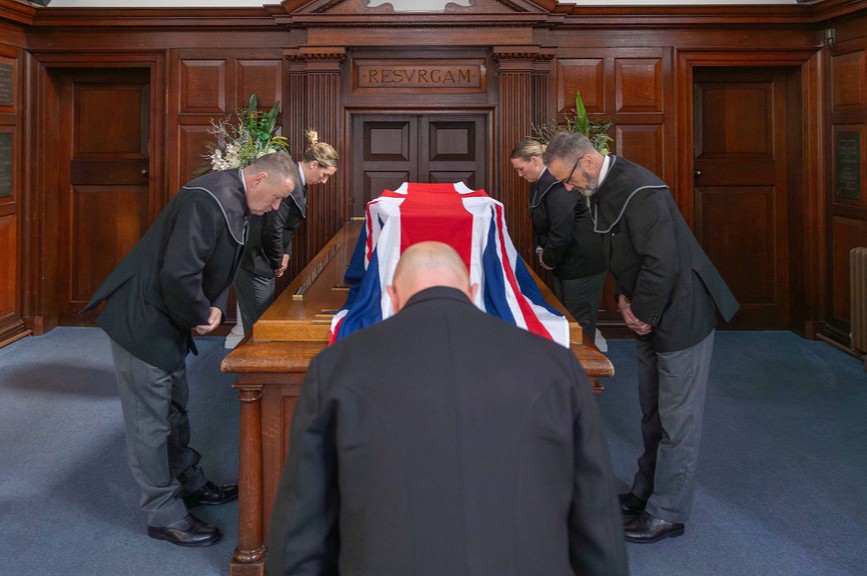
The coffin enters the venue
The coffin is carried into the church, chapel or crematorium by professional or family pallbearers. Close family will commonly follow before taking their seats.
Your funeral director coordinates the arrival, seating, flowers, officiant and timings.
The ceremony takes place
A traditional funeral service may include:
- a welcome;
- hymns or other music;
- prayers or reflective words;
- readings;
- a eulogy;
- memories shared by family or friends;
- a period of quiet reflection;
- final words of farewell.
The committal
At a cremation, the committal usually takes place near the end of the chapel service.
For a burial, the congregation may travel from the main service to the cemetery or churchyard. Final words or prayers are then spoken at the graveside.
The gathering afterwards
Many families hold a wake or reception at a family home, pub, hotel, community venue or another familiar place.
The local Best Funeral Director manages the practical details throughout, allowing your family to focus on the service and the people who have come to remember your loved one.

Start making funeral arrangements
One call to Best gives you clear guidance and trusted local care.
Call 0333 242 2368 to arrange a Best Funeral. We will explain the next step and instruct the Best Funeral Director selected for your area.
A traditional funeral begins before the hearse arrives
The procession and ceremony are the parts of a funeral that families see. A great deal of professional care has already taken place before the hearse arrives.
The local funeral director may have:
- brought the person who has died into their care;
- confirmed their identity and completed the necessary records;
- provided professional mortuary care;
- washed, dressed and prepared them according to the family’s wishes;
- prepared the coffin;
- arranged a chapel-of-rest visit;
- checked the funeral route and timings;
- spoken with the minister or celebrant;
- coordinated the crematorium, cemetery or church;
- prepared the vehicles and equipment;
- checked every detail of the service.
These responsibilities require trained people, suitable premises, specialist equipment, respectful procedures and careful attention.
Best looks beyond the parts of a funeral that are easy to see. The local Best Funeral Director is selected partly on the quality of their people, facilities, professional standards and care. The Best Care Promise reflects the standards expected behind every Best Funeral, including the care taking place when a family cannot be present.
Traditional burial or traditional cremation?
The ceremony leading up to the committal can be very similar for burial and cremation.
| Traditional cremation | Traditional burial | |
|---|---|---|
| Ceremony | At a crematorium, church or another suitable venue | At a church, chapel or another suitable venue |
| Committal | Usually at the crematorium | At the graveside |
| Afterwards | Ashes can be collected, buried, scattered or placed in a memorial | The grave becomes the permanent place of burial |
| Costs to consider | Crematorium and officiant charges | Grave purchase, grave opening and burial fees |
| Often chosen because of | Personal wishes, flexibility or family preference | Faith, family tradition or an existing family grave |
SunLife’s 2026 figures place the average traditional attended cremation at £4,200 and a traditional attended burial at £5,440. These are UK averages. Local costs depend on the funeral director, venue and choices made by the family.
Your local Best Funeral Director can explain nearby crematoria, cemeteries, churchyards and any existing family grave arrangements.
Keeping the traditions that matter
Traditional funerals can include many familiar elements, although they do not all carry the same meaning for every family.
Before deciding on the details, consider three questions.
What would feel missing?
This might be:
- leaving from the family home;
- sing a particular church;
- travelling along a familiar route;
- family members carrying the coffin;
- a certain hymn, prayer or reading;
- burial in an existing family grave.
What reflects the person?
Consider the music they loved, the communities they belonged to, their humour, their work and the places that shaped their life.
What will help the family?
Some traditions provide structure and comfort. Others may create pressure without feeling especially meaningful. Your family can keep, adapt or leave out individual elements.
A traditional funeral might include a hearse and formal procession alongside contemporary music and a colourful order of service. Another may follow a religious structure but end with an informal gathering at a favourite local pub.
The useful question is:
Which parts of the funeral need to feel familiar for us to feel we have done right by them?
Share the answer with your funeral director. It gives them a clearer understanding of what should be protected when the service is planned.
Can a traditional funeral be personalised?
Yes. A familiar structure leaves plenty of room for choices that reflect the person who has died.
You can personalise:
- the route taken by the funeral procession;
- the coffin and its materials or design;
- the flowers;
- the hearse or funeral vehicles;
- music played on arrival, during reflection and at the end;
- readings, prayers and poems;
- the eulogy and family tributes;
- photographs or a video tribute;
the dress code; - the order of service;
- the wake or gathering afterwards.
A traditional funeral can also be non-religious. A civil celebrant, humanist officiant, family member or friend may lead the ceremony where the chosen venue permits it.
The strongest personal details are often simple: one piece of music, a route past home or a story that everyone recognises.
Unsure which affordable funeral option is right?
You do not need to choose before speaking to us. Call 0333 242 2368 and we will explain the local options, help you understand likely costs and connect you with your selected Best Funeral Director.
How much does a traditional funeral cost?
SunLife reports that the average UK cost of a traditional attended funeral in 2026 is £4,510. This combines an average of £4,200 for a traditional cremation and £5,440 for a traditional burial.
Your actual cost will depend on:
- local funeral-director charges;
- burial or cremation;
- the coffin;
- the number and type of funeral vehicles;
- crematorium, cemetery or church fees;
- the length and location of the service;
- minister or celebrant fees;
flowers; - printed materials;
- additional preparation or care;
- the wake or reception.
A traditional funeral does not need to include every available addition. You can keep the attended service, hearse and procession while choosing a simpler coffin, one family car or more modest flowers.
Best is not built around being the cheapest. The aim is excellent local care at a fair and transparent price. The funeral itself is delivered according to the local Best Funeral Director’s own services and price list, with the final amount shaped by your family’s choices.
Ask for:
- the funeral director’s Standardised Price List;
- a written, itemised quotation;
- a clear explanation of third-party fees;
- confirmation of what is optional;
- details of any payment required before the funeral.
The Best Price Promise provides additional reassurance around fair, transparent value. The final approved wording should be checked against the current live customer terms before publication.
Why arrange a traditional funeral through Best?
Choosing a funeral director can feel difficult because families rarely have the information needed to judge the care, people and facilities behind a service.
Best has already done that work.
We carefully select one local independent Best Funeral Director for each area, looking at:
- local reputation;
- professional standards;
- trained and experienced people;
- suitable funeral premises;
- mortuary facilities;
- vehicles and equipment;
- the range of funerals they can provide;
- the care offered to families.
The local Best Funeral Director then provides the funeral through their own established business, staff and premises. They become the family’s local point of contact for the arrangements.
Best remains available and accountable for the standards promised. Families receive national reassurance alongside identifiable, independent local care.
Best does not give you a long list of unfamiliar providers to compare. The local Best Funeral Director has already been identified, checked and carefully selected, helping you move forward with greater confidence.

Some things just need to be right.
Arrange a Best Funeral and know it will be delivered locally by a carefully selected independent Best Funeral Director.
Call Best now on 0333 242 2368 and know you’re in great care.
Frequently asked questions about traditional funerals
Traditional funerals can involve a number of choices, from the service venue and funeral procession to burial, cremation and personal family traditions. These answers explain what usually happens and where the arrangements can be adapted.
Q: What is classed as a traditional funeral?
A: A traditional funeral is generally an attended ceremony followed by burial or cremation. It commonly includes a coffin, hearse, procession, formal service, music or readings and a gathering afterwards.
Q: Does a traditional funeral have to be religious?
A: No. A traditional funeral can be religious, non-religious, civil or humanist. The ceremony may be led by a minister, celebrant, humanist officiant or, where appropriate, a family member.
Q: Can a traditional funeral end with cremation?
A: Yes. Many traditional funerals are attended cremations. The whole service may take place at the crematorium, or the family may hold a church or venue service before travelling to the crematorium for the committal.
Q: What is a traditional funeral procession?
A: The funeral procession, also known as the cortege, is the journey made by the hearse and accompanying family vehicles to the service or committal. It may begin at the funeral home, family home or another agreed location.
Q: Can relatives carry the coffin?
A: Relatives and friends can often act as pallbearers. The funeral director will check that this is safe and appropriate, explain what will happen and guide everyone on the day.
Q: Can we visit the person before the funeral?
A: A chapel-of-rest visit can usually be arranged where circumstances permit. Your funeral director will explain the available times and help prepare you for what to expect.
Q: How long does a traditional funeral service last?
A: The length depends on the venue. Crematorium chapels use scheduled service times, while churches and other venues may offer more flexibility. An extended crematorium slot may be available where additional time is needed.
Q: Do people have to wear black?
A: No. Some families prefer traditional black clothing, while others choose a favourite colour or ask guests to dress in a way that reflects the person being remembered.
Q: Is a traditional burial more expensive than cremation?
A: Burial is commonly more expensive because costs can include purchasing a grave, opening it and paying cemetery or churchyard fees. SunLife’s 2026 averages are £5,440 for a traditional burial and £4,200 for a traditional cremation. Local charges vary.
Q: Can we combine traditional and modern elements?
A: Yes. A funeral can retain a formal procession, hearse and ceremony while including contemporary music, personal photographs, colourful flowers, video tributes or an informal wake.
Arrange a Best Funeral
A traditional funeral can provide the familiar structure your family needs while making space for the beliefs, memories and personal details that matter.
Best has already selected the local independent funeral director who will provide the care and arrangements in your area. One call gives you someone to guide you from here.
Enter your postcode to see the Best Funeral Director carefully selected for your area, or call Best at any time on 0333 242 2368.